Regent Roofing
Resin topcoat being poured for a GRP fibreglass roof
Cure It GRP Fibreglass

Fibreglass Roofs in Worcestershire

A hard, joint-free Cure It GRP finish laid over your flat roof, moulded around upstands and roof lights, and topped with a coloured topcoat that copes with occasional foot traffic.

Get a FREE Quote

Fill in the form and we'll get back to you shortly.

Step 1 of 2

Fibreglass Roofs

GRP Fibreglass Roofing

GRP stands for glass reinforced plastic. On a flat roof it is built up on site from a layer of resin, a glass fibre mat and more resin, which cures into one hard, continuous sheet. With no laps or seams, there is nowhere for water to get between layers, and the finished surface stands up to being stood on.

Regent Roofing uses the Cure It GRP system. The deck is prepared first, normally with new boards bonded and taped at the joints, then moulded GRP edge trims are fitted around the perimeter. The laminate goes down across the whole roof and is sealed with a topcoat, which gives the colour and protects the layer underneath.

Because the resin is applied wet, GRP follows awkward shapes well, running up walls, around roof lights and into outlets without separate pieces. It suits roofs that see foot traffic and roofs with plenty of detail. Resin needs dry conditions to cure, so the job is booked for a settled spell to give the laminate the best start.
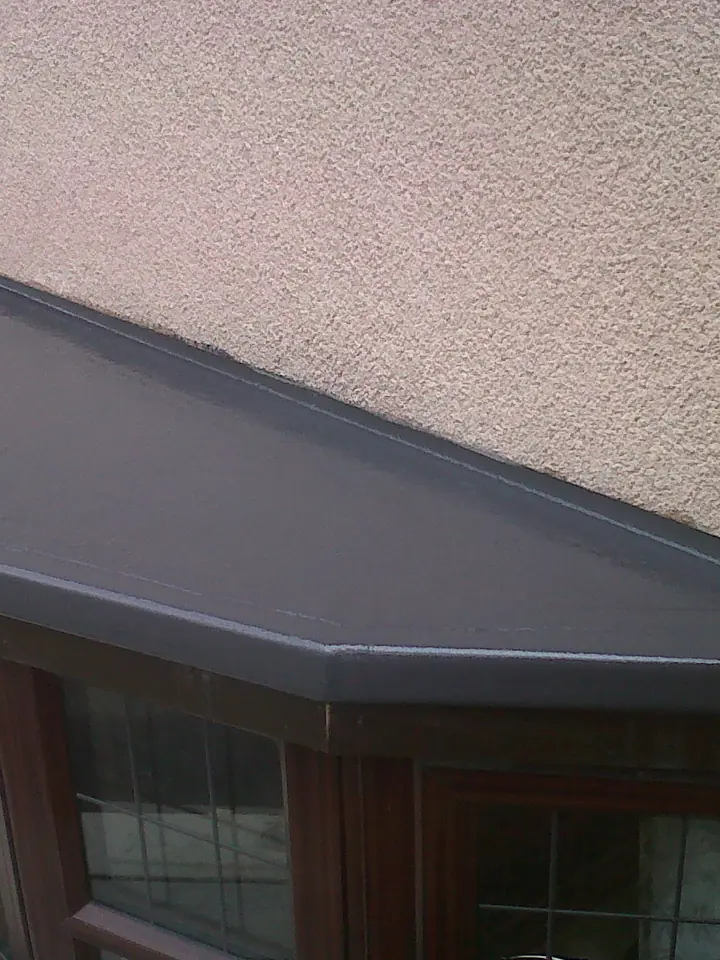
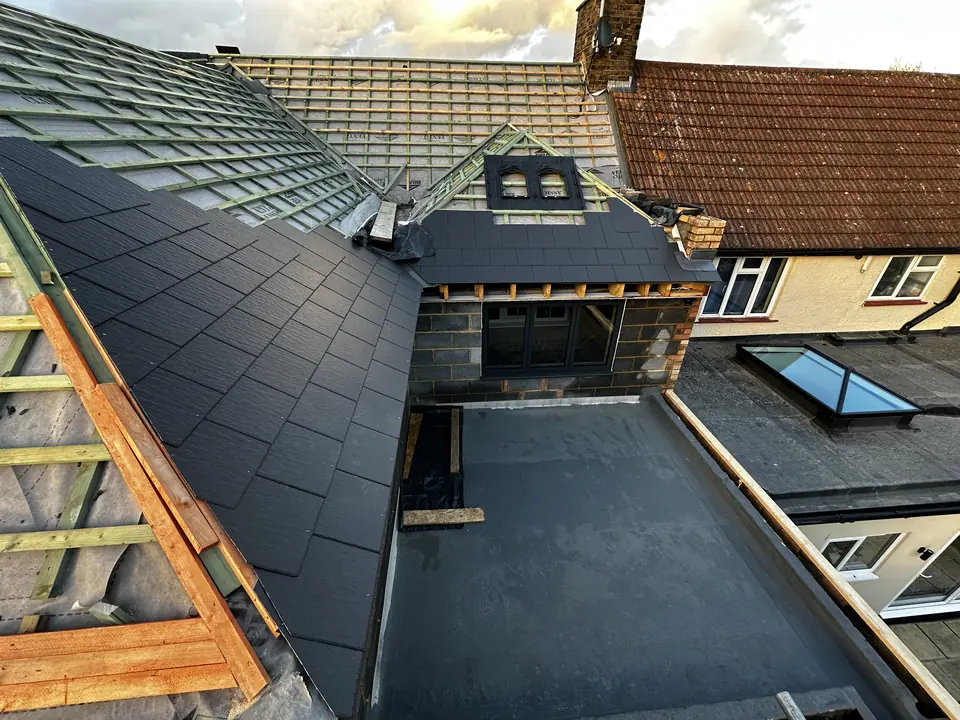
GRP fibreglass roof over a bay window
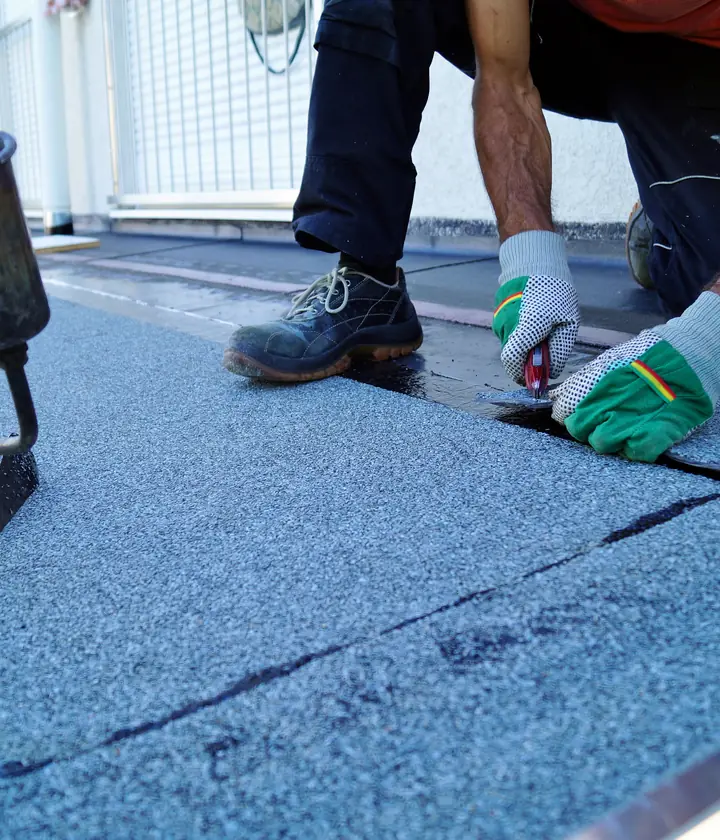
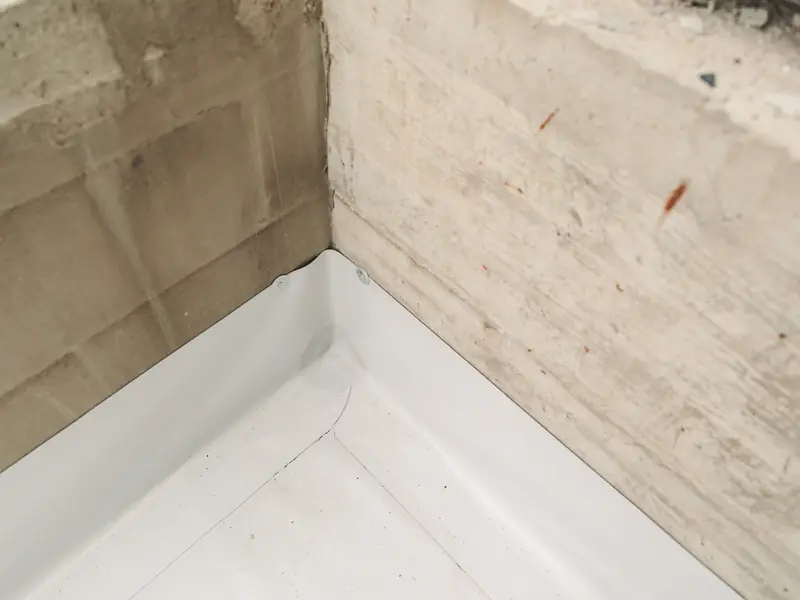
Flat roof covering turned up at a wall corner
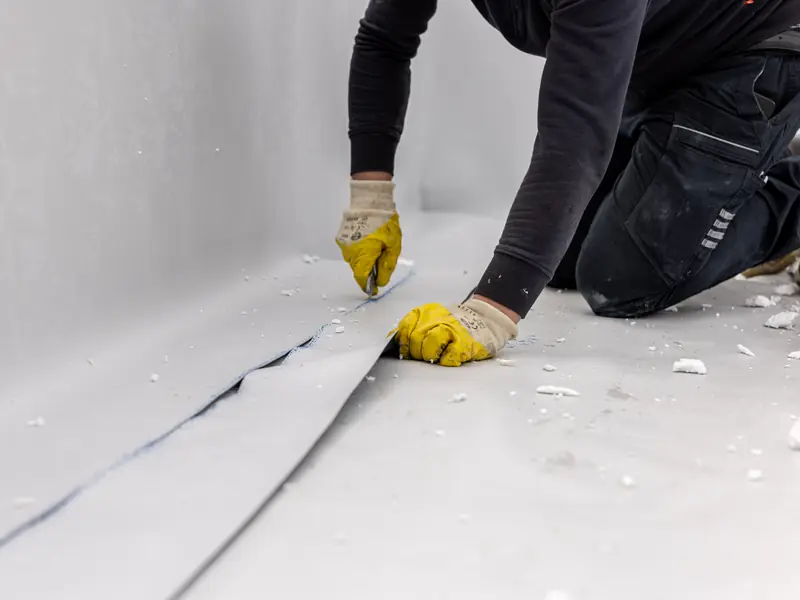
Roofer trimming a flat roof covering at the edge
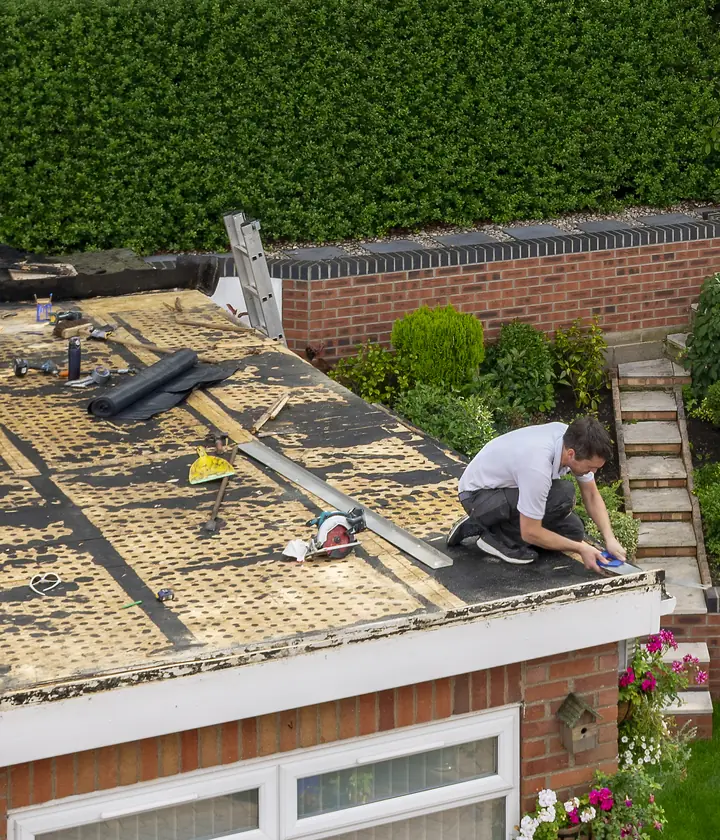
Flat roof covering laid around a roof window on a dormer
GRP Roof Work

Inside a Fibreglass Roof

Every GRP roof is built in layers on site, from the deck to the coloured topcoat.

  • Old covering stripped from the deck
  • Deck boards renewed where needed
  • Board joints taped before laminating
  • Preformed GRP edge trims fixed
  • Cure It resin and glass fibre mat
  • Upstands and roof lights laminated in
  • Outlets formed into the laminate
  • Coloured topcoat to finish
Why Choose Us

Why Choose Regent for GRP

Fibreglass rewards careful preparation, so the deck and the weather are both checked before any resin is mixed.
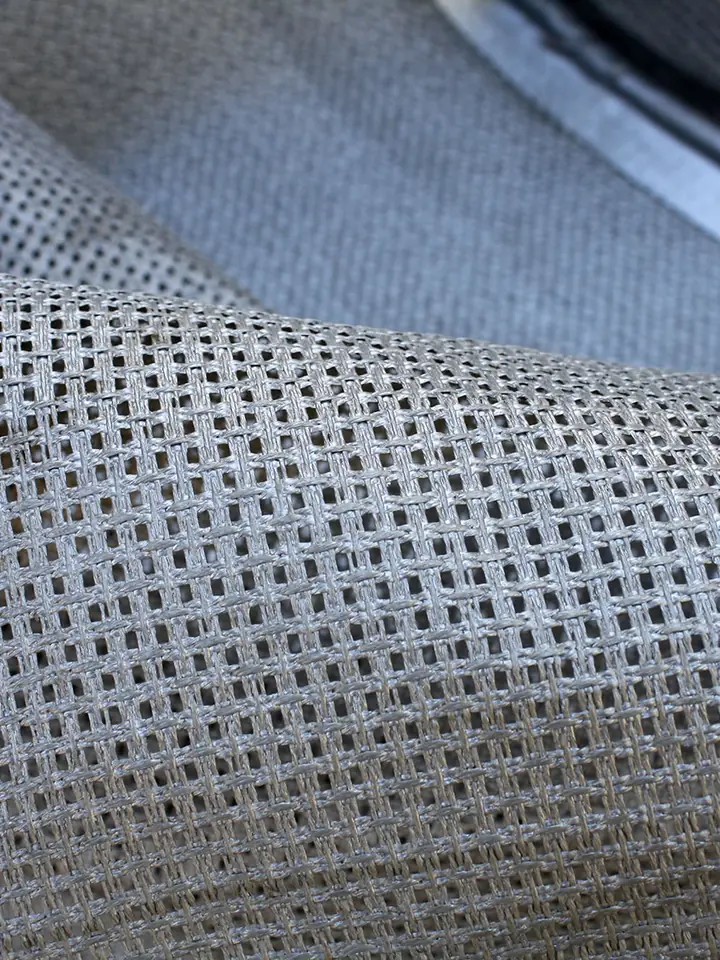
Fibreglass matting used in a GRP roof

A Named GRP System

Cure It GRP is the system used, so you know exactly which resin, mat and topcoat are going onto your roof.

Laid in Dry Weather

Resin is only applied when conditions let it cure properly, so the laminate bonds as it should.

Built for Detail

Walls, roof lights and outlets are laminated into the same covering, leaving no separate joins.

Choice of Finish

The topcoat can be chosen in different colours, which helps where the roof is seen from upstairs.

Ready to Book a Roofer?

Ring Regent Roofing, or leave your details for a quote.

Swipe to See More

Thinking About a GRP Roof?

Ring now, or leave a few details and a quote will follow.

Related Services

More Roofing From Regent

How It Works

How a GRP Roof Is Laid

GRP is built up on the roof itself, so the order of work matters as much as the materials.

01

Get in Contact

Ring 0800 151 2875 with the rough size of the roof, your postcode and whether it will be stood on.

02

Roof Assessment

The deck, falls, edges and details are checked to plan the boards, trims and laminate needed.

03

Your GRP Price

You receive a price for a Cure It GRP roof, including any deck work and your topcoat colour.

04

Lay the Laminate

Boards and trims go down, then resin and glass mat are laid across the roof and finished in topcoat.

05

Final Check

We review the completed work with you and confirm everything has been done as agreed.

Swipe to See More

FAQs

GRP Fibreglass Questions

What Is a GRP Fibreglass Roof?

A GRP roof is made from resin reinforced with glass fibre matting, laid in place on the roof and left to cure into a rigid sheet. A pigmented topcoat goes over the top to protect it and give the final colour.

Can I Stand on a Fibreglass Roof?

Yes. Once cured, GRP forms a hard surface that takes foot traffic, and that makes it a common pick for roofs reached for maintenance or used as a balcony. The deck beneath has to be firm, so it is checked and boarded correctly first.

Does the Weather Affect a GRP Installation?

It does. The resin will not cure properly in rain, on a damp deck or in very low temperatures, so laminating is planned for dry days. If the weather turns, the roof is protected and work resumes once conditions allow.

What Colours Can a GRP Roof Be?

The topcoat is pigmented, so GRP roofs are not limited to black. Grey is a common choice, and other colours can be used where the roof is in view from windows or the garden. Colour options are discussed when the roof is priced.

Why Do GRP Roofs Use Moulded Edge Trims?

Moulded GRP trims give the edges of the roof a neat, consistent profile and are laminated into the main covering, so the edge and the roof surface become one piece. They also carry rainwater off the roof edge cleanly.

Is GRP Better Than EPDM Rubber?

Neither is better for every roof. GRP gives a rigid, seam-free finish that suits foot traffic and detailed roofs, while EPDM is flexible and well suited to simple shapes. Both are fitted, so the advice follows what your roof needs.
Contact

Can't Find the Answer You're Looking For?

Get in touch with us today.

Call 0800 151 2875Get a FREE Quote